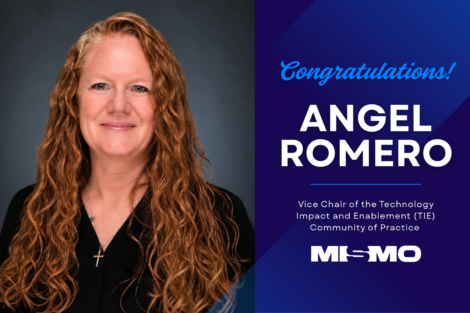
Down Payment Resource’s Angel Romero Named Vice Chair of MISMO Technology Impact and Enablement Community of Practice
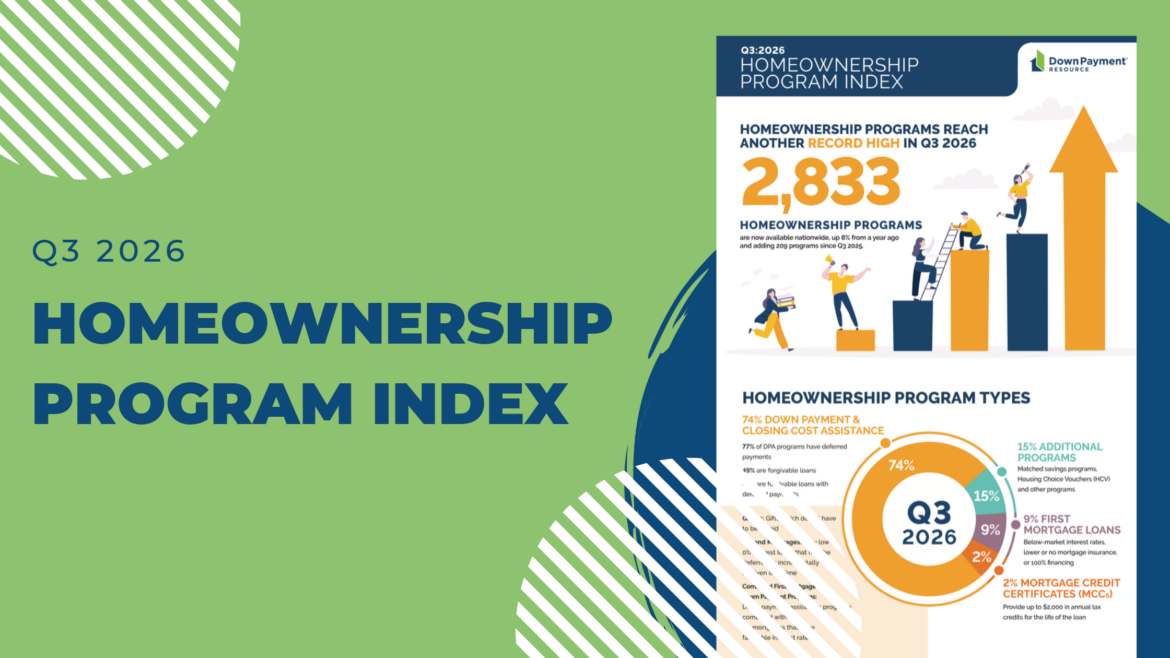


Down Payment Resource (DPR) has released its Q3 2026 Homeownership Program Index (HPI), showing the highest number of programs in the survey’s history. As of October 1, 2026, there are 2,833 homeownership programs available nationwide, up 87 programs, or 3.2%, from 2,746 in Q2 2026.
The growth is not just in numbers. Programs are expanding in the ways that matter most to lenders and buyers, with more grants, greater flexibility on income ceilings, and broader coverage for property types that have historically been harder to finance.
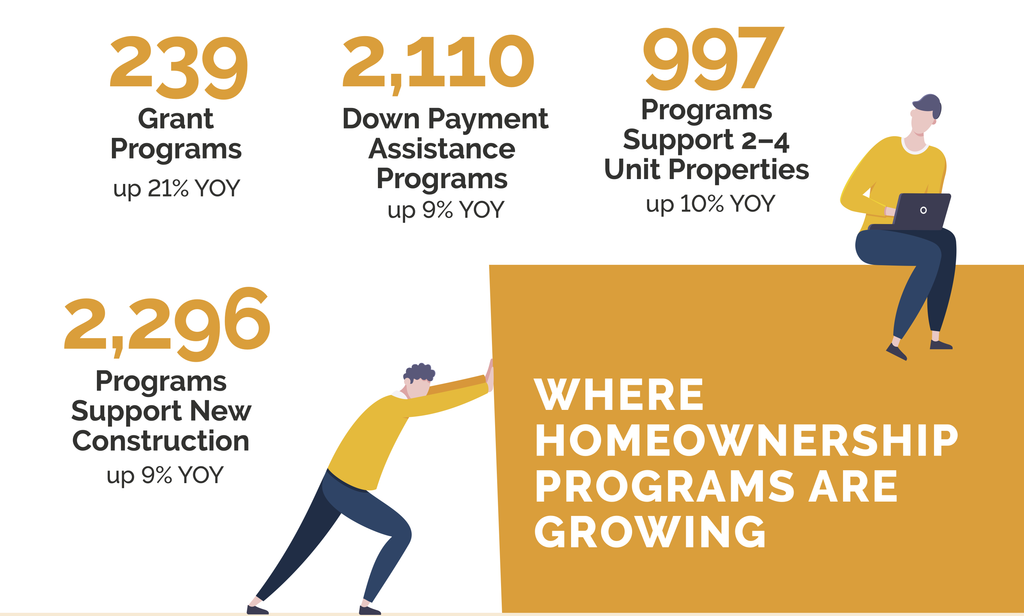
Grant programs increased to 239 in Q3, up from 234 in Q2, continuing a trend toward funding that does not add to a borrower’s debt burden. Grants now represent just over 8% of all program types, and their growth reflects a deliberate push by program providers to meet buyers where they are financially.
For borrowers stretched thin by elevated home prices and elevated rates, a grant can mean the difference between entering the market now and waiting for months or years. For lenders, grants simplify the conversation because there is typically no subordinate lien to explain and no repayment schedule to document. Some grants do carry occupancy or recapture requirements, so terms are worth confirming early.
Program Spotlight
The Pathways to Homeownership I & II Grant in New Hampshire offers 0% interest and deferred-payment grants that are forgiven after five years. Grants are for 5% of the purchase price, up to $15,000 in Coös County and up to $20,000 in Grafton County for first-time and repeat homebuyers who work and live in the counties. The household Income Limit is up to 120% AMI and the funds may be used in conjunction with other assistance programs. Homebuyer education and 1:1 counseling required.
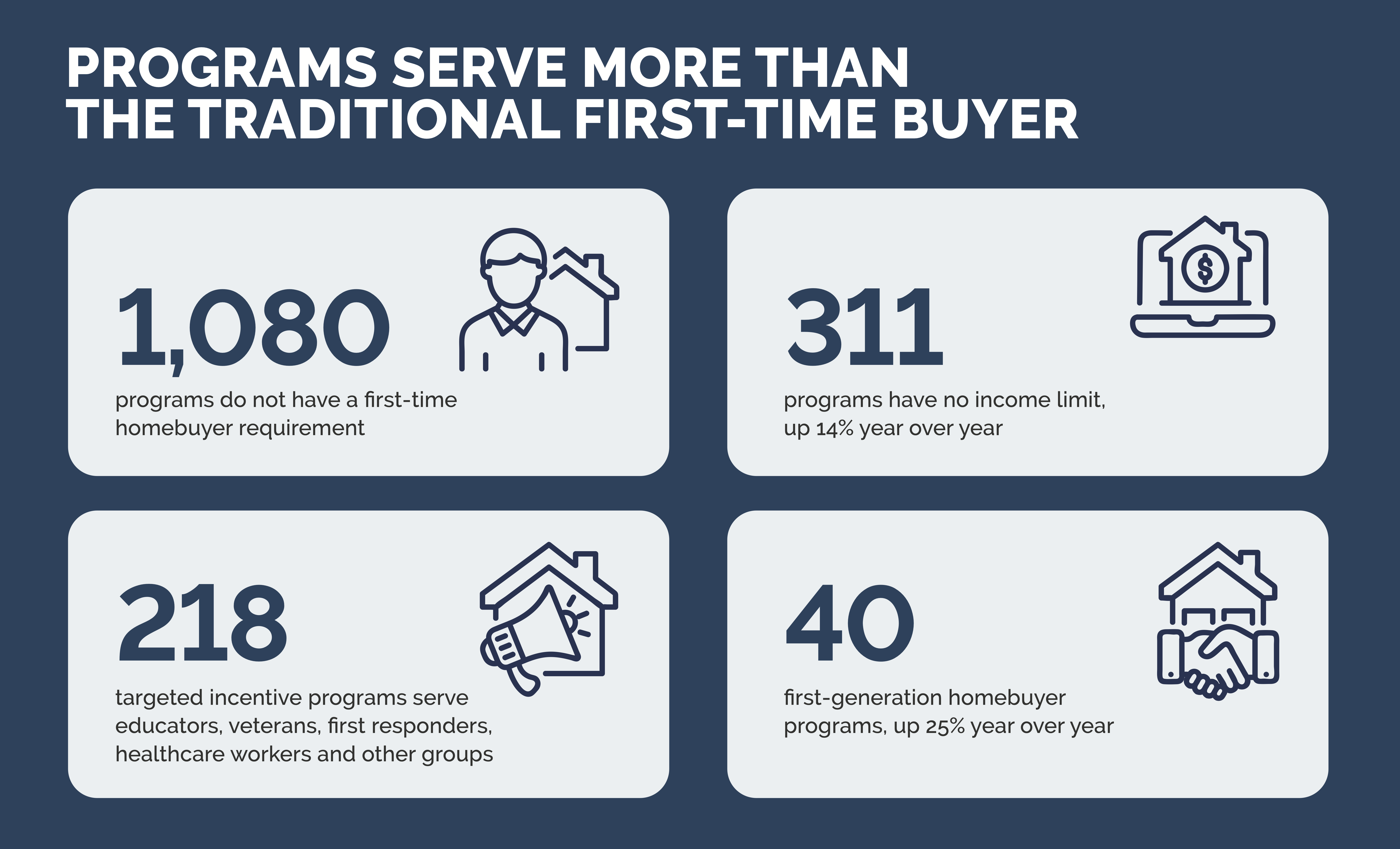
Programs with no income restrictions reached 311 in Q3, up from 291 in Q2. That means 11% of all programs are now available to borrowers regardless of their earnings.
This matters because one of the most persistent myths in homeownership lending is that down payment programs are for low-income buyers. The data does not support that. Programs deliver an average benefit of $18,000 per buyer and lower loan-to-value ratios by an average of 8.8%, which can improve pricing, reduce mortgage insurance costs and strengthen borrower profiles across income levels.
A growing share of homebuilders and housing professionals are recognizing that down payment assistance is equally relevant for move-up and repeat buyers, the “missing middle” of the housing market. These are mortgage-ready consumers with steady incomes and solid credit who hesitate not because they can’t qualify, but because they are reluctant to drain savings, liquidate investments or deplete emergency reserves to cover upfront costs.
Program Spotlight
California’s Golden State Finance Authority (GSFA) Golden Opportunities Program is available statewide and has no income limit for FHA, VA or USDA loans originated through its programs. For a government 1st mortgage, borrowers can receive up to 5.00% of the loan amount, plus an amortizing 15-year second mortgage at 3.50% of the 1st mortgage amount, with optional Gift funds up to 1.50%. For conventional loans, maximum income and purchase price limits vary by county. The income limit is based solely on qualifying income.
The Q3 data make clear that homeownership programs are not just for first-time buyers. Of the 2,833 programs tracked, 1,080, representing 38% of the total, have no first-time homebuyer requirement, making them available to repeat buyers, move-up purchasers and others re-entering the market.
Programs supporting new construction increased to 2,296, up from 2,209 in Q2. That is good news for homebuilders and their lending partners, who can now point buyers to a wider array of programs, whether they are purchasing an existing home or building a new one.
Manufactured housing programs grew to 1,124, up from 1,089 in Q2. Manufactured homes remain one of the most affordable pathways to homeownership available in today’s market, and the expansion of programs supporting them broadens options for buyers in markets where site-built homes are out of reach.
Multi-unit programs increased to 997, up from 962 in Q2, supporting buyers seeking to offset housing costs with rental income.
Program Spotlight
Nevada Housing Division (NHD) Alpine Vista Advantage serves eligible buyers purchasing a new home in the Alpine Vista community developed by Desert Wind Homes in Washoe County. The program combines $27,500 in down payment and closing-cost assistance with a 4% builder contribution used for the program’s rate buydown. The program is open to first-time and repeat buyers, but buyers must have been a Nevada resident for at least six months prior to enrollment.
The majority of programs, 1,581 (56%), are second-mortgage programs, up from 1,528 in Q2 2026. A second mortgage homeownership program, often provided by a state housing finance agency, local government or nonprofit organization, is a subordinate loan recorded after the first mortgage. Combined assistance programs account for 290 programs (10%), while first-mortgage programs represent 255 programs (9%), both holding relatively steady quarter over quarter. Grant programs grew to 239 (8%), up from 234 in Q2, offering non-repayable funds.
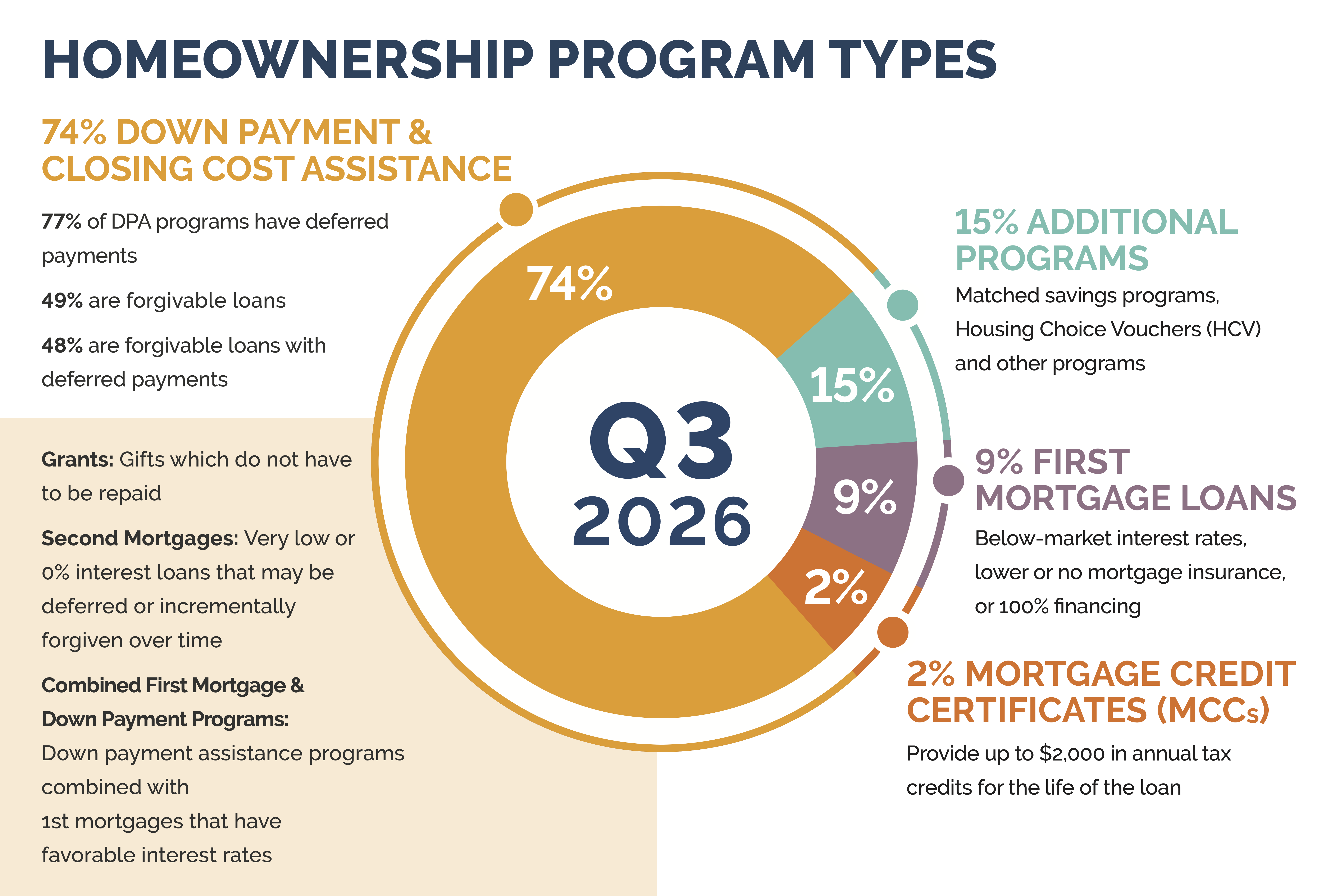
Other program types include 155 below-market-rate and resale-restricted programs (5%), 93 housing choice voucher programs (3%), 66 matched savings programs (2%), and 49 mortgage credit certificates (2%), reflecting a range of approaches to improving affordability and expanding access to homeownership.
Most homeownership programs remain active and focused on down payment and closing cost support.
Of the 2,833 homeownership programs nationwide:
Homebuyers can search for programs available in their area using DPR’s free search tool.
A complete, state-by-state list of homeownership programs can be viewed here. You can also download the full infographic.
Down Payment Resource builds tools that help mortgage lenders, real estate agents, multiple listing services and consumer listing sites build relationships with homebuyers by connecting them with the down payment help they need.
To learn how Down Payment Resource can help you support homebuyers, contact us.
Methodology
Published quarterly, DPR’s HPI surveys the funding status, eligibility rules and benefits of U.S. homeownership programs administered by state and local housing finance agencies, municipalities, nonprofits and other housing organizations. DPR communicates with over 1,400 program providers throughout the year to track and update the country’s wide range of homeownership programs, including down payment and closing cost programs, Mortgage Credit Certificates (MCCs) and affordable first mortgages, in the DOWN PAYMENT RESOURCE® database.