The $1.8 Billion Opportunity Lenders Are Missing
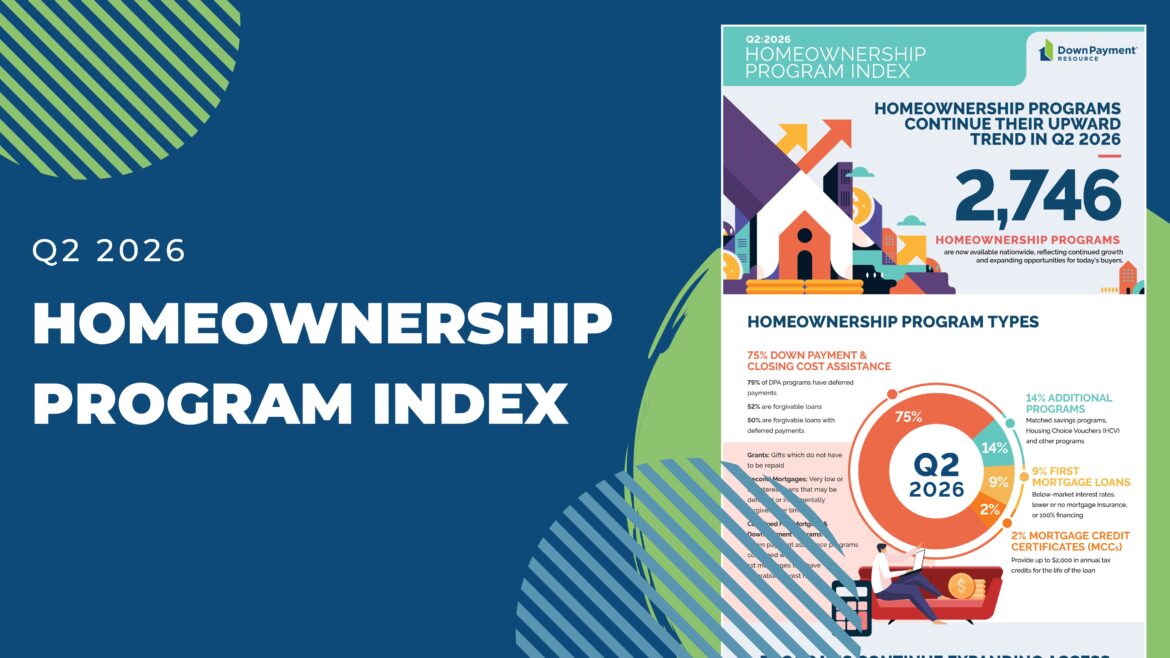


Down Payment Resource (DPR) has released its Q2 2026 Homeownership Program Index (HPI) report, showing continued growth in the scope and breadth of homeownership programs. As of July 1, 2026, there are 2,746 programs available nationwide, up 67 from Q1 2026.
With home prices in many markets elevated and buyers facing significant upfront costs, homeownership programs like down payment assistance (DPA) continue to play a central role in helping lenders qualify mortgage-ready borrowers. These programs provide meaningful financial support that can be used for down payments, closing costs, rate buydowns and more, helping reduce loan-to-value ratios by an average 8.8% and strengthen borrower profiles. With 62% of programs serving incomes above $100,000, assistance is available well beyond the first-time or lower-income buyer.
Municipalities continue to lead in program delivery, accounting for 39% of all programs (1,068), followed by nonprofits at 22% (601) and state housing finance agencies at 18% (485). Local HFAs represent an additional 8% (207 programs) and tribal organizations account for 2% (56 programs).
Second-mortgage programs remain the most common structure, accounting for 56% of all programs (1,528) and often structured as deferred or forgivable loans that reduce upfront costs.
Grant programs, which require no repayment, rose to 234 programs and now represent 9% of all program types, up from 8% in Q1.
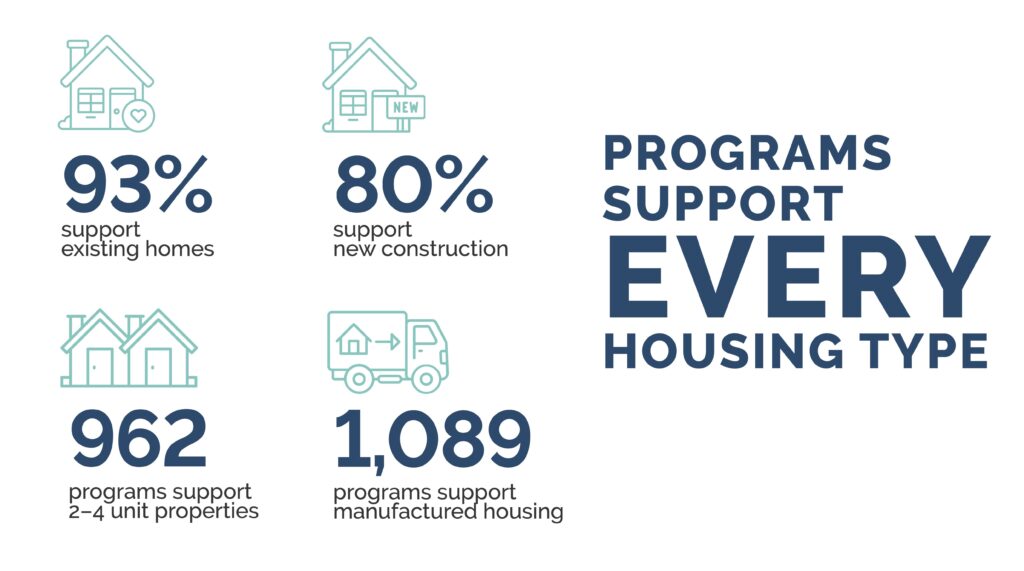
Additionally, programs supporting multi-unit properties (2–4 units) increased to 962, up 3% from Q1. Programs supporting manufactured homes increased to 1,089, a gain of 3% from Q1.
Program Spotlight
One Roof Community Housing, a non-profit organization, offers its Purchase Assistance Loan (PAL) program to purchasers of properties with four or fewer units that will be owner-occupied. The maximum PAL amount is the lesser of 18% of purchase price or $40,000, and PAL may be combined with other assistance programs to bring the LTV to 80%. The minimum interest rate is 5.5%, with either a fixed or adjustable rate. The loan will be amortized over a maximum term of 20 years when the first mortgage has a 20 to 30 year term. There are no income limits or first-time homebuyer requirements; however, buyers cannot currently own a home.
Of the 2,746 programs identified, 80% support new construction and 93% support existing construction, meaning there is no shortage of program options regardless of what a buyer is purchasing.
A growing share of homebuilders and housing professionals are recognizing that down payment assistance is equally relevant for move-up and repeat buyers, the “missing middle” of the housing market. These are mortgage-ready consumers with steady incomes and solid credit who hesitate not because they can’t qualify, but because they are reluctant to drain savings, liquidate investments or deplete emergency reserves to cover upfront costs.
Program Spotlight
Golden State Finance Authority (GSFA) Platinum Down Payment Assistance has income limits over $100,000 for both first-time and repeat buyers, no purchase price limits and supports new construction. The primary amount of assistance (3.5%) is in the form of a 15-year fully amortizing second mortgage. Additional assistance (up to 1.5%) may be available in the form of a gift that does not have to be repaid. Homebuyers can purchase property anywhere in California.
Programs continue to expand in ways that reflect how today’s buyers are approaching homeownership. Support for first-time buyers remains strong, with 1,696 programs (62%) available to first-time homebuyers, a 2% increase from Q1. 35 programs support first-generation buyers, up 6% from Q1, continuing to expand access for those entering the market without family homeownership history.
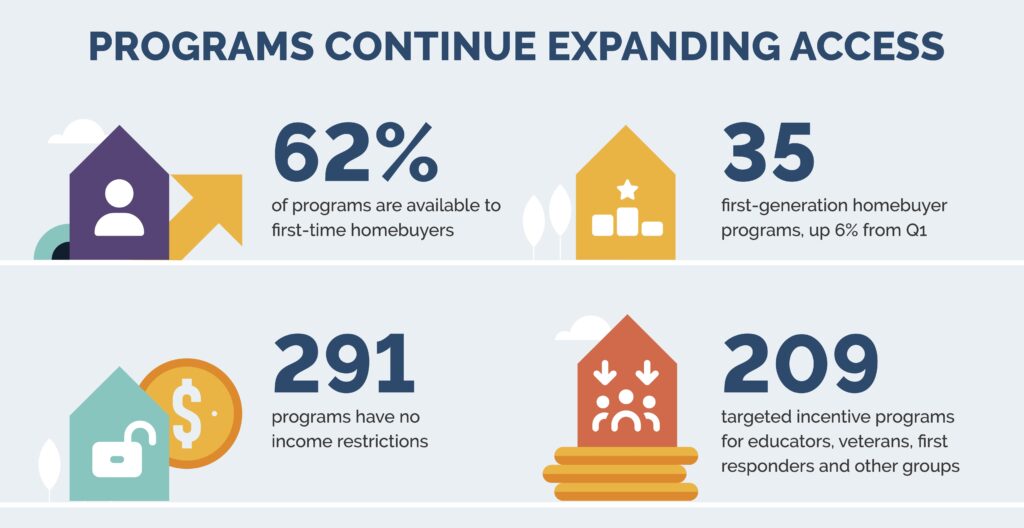
Targeted incentive programs also grew from Q1, with 209 programs now offering special incentives based on occupation or borrower characteristics, up from 206 in the prior quarter. Educators are the largest group served with 75 programs, followed by Native American homebuyers with 58 programs and veterans with 54 programs. Protectors including law enforcement and first responders are supported by 51 programs, firefighters by 46 and military borrowers by 40. Surviving spouses have access to 21 programs and borrowers with disabilities to 20, rounding out a broad and growing range of targeted options.
Program Spotlight
Movin’ Out – Wisconsin Homebuyer and Homeowner Rehabilitation (HHR) Loan Program aids households who have a permanently disabled member with a second mortgage program at 0% interest. A permanent disability includes sensory, physical, cognitive or chronic medical disability, intellectual disability, documented learning disability, persistent mental illness, developmental delays and/or autism, cerebral palsy, epilepsy and other disabilities. Income limits to qualify are up to 80% AMI and purchasing new construction is not allowed. Payments on the second mortgage loan are deferred but due upon sale, transfer or change of occupancy.
Of the 2,746 homebuyer assistance programs nationwide as of July 1, 2026, 2,114 (77%) are currently active and funded, consistent with the prior quarter. 325 programs (12%) are inactive, 158 (6%) are temporarily suspended and 149 (5%) have a waitlist for funding. 2,046 programs (75%) provide down payment or closing cost assistance, reinforcing their central role in addressing affordability challenges.
Second-mortgage programs remain the most common structure at 56% (1,528 programs), followed by combined assistance programs at 10% (284) and first-mortgage programs at 9% (247). Grant programs rose to 234 (9%), up from 220 in Q1, while other program types including resale-restricted housing (151), housing choice vouchers (93), matched savings programs (63) and mortgage credit certificates (49) provide additional pathways to improved affordability.
Breakdown of all Q2 2026 programs
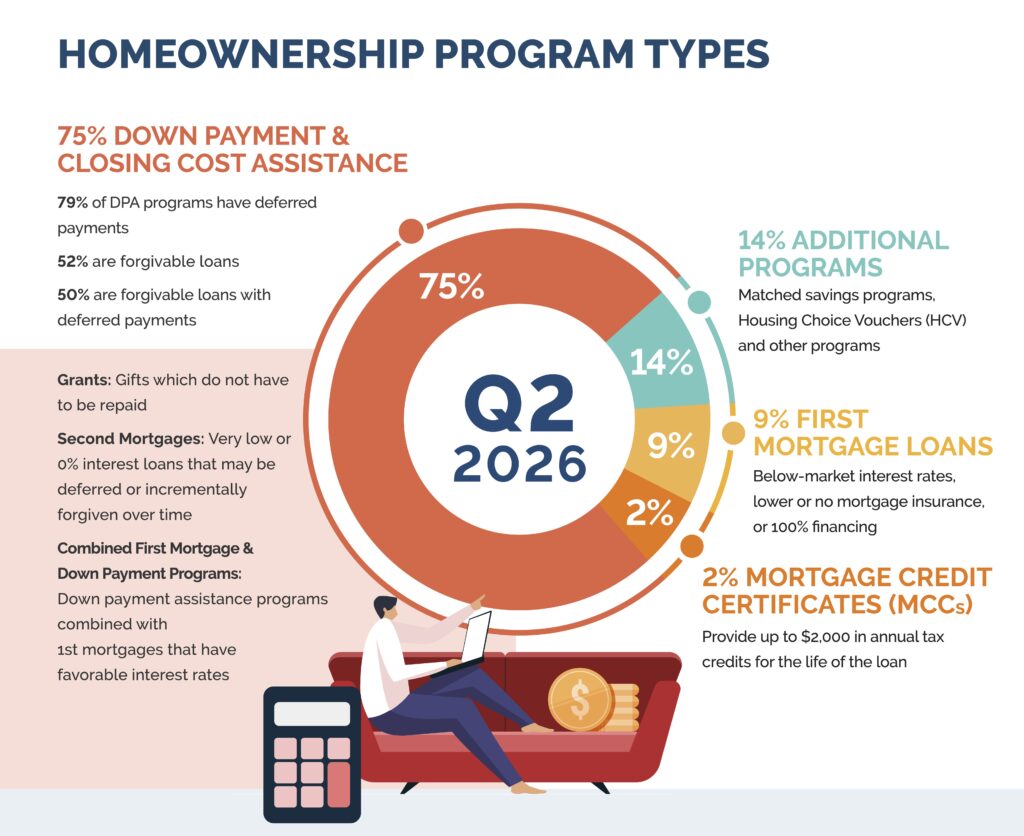
Of the 2,746 homebuyer assistance programs nationwide as of July 1, 2026:
Homebuyers are encouraged to use DPR’s free search tool to find programs for which they may qualify.
A complete, state-by-state list of homeownership programs can be viewed here. You can also download the full infographic.
Down Payment Resource builds tools that help mortgage lenders, real estate agents, multiple listing services and consumer listing sites build relationships with homebuyers by connecting them with the down payment help they need.
To learn how Down Payment Resource can help you support homebuyers, contact us.
Methodology
Published quarterly, DPR’s HPI surveys the funding status, eligibility rules and benefits of U.S. homeownership programs administered by state and local housing finance agencies, municipalities, nonprofits and other housing organizations. DPR communicates with over 1,400 program providers throughout the year to track and update the country’s wide range of homeownership programs, including down payment and closing cost programs, Mortgage Credit Certificates (MCCs) and affordable first mortgages, in the DOWN PAYMENT RESOURCE® database.